Mimosa hostilis, a mysterious tree
24
Aug
Aug
Mimosa hostilis, a mysterious tree
Known by many native names—Jurema, Karirí, Pankarurú, Tusha, and Fulnio—the mysterious Mimosa hostilis tree (formerly classified as Mimosa tenuiflora) holds a legendary status in indigenous cultures across South and Central America.
One of its most evocative ancient titles originates from the Nahuatl language: Tepezcohuite, or “the tree of the hill that bleeds.” This name was inspired by the striking, deep reddish-purple layer of its inner root bark.
At Hostilis Botanics, we honor this rich botanical heritage by sourcing authentic, ethically harvested Mimosa hostilis root bark (MHRB) directly for artisans, natural dyers, and botanical researchers.
Botanical Characteristics and Native Origins
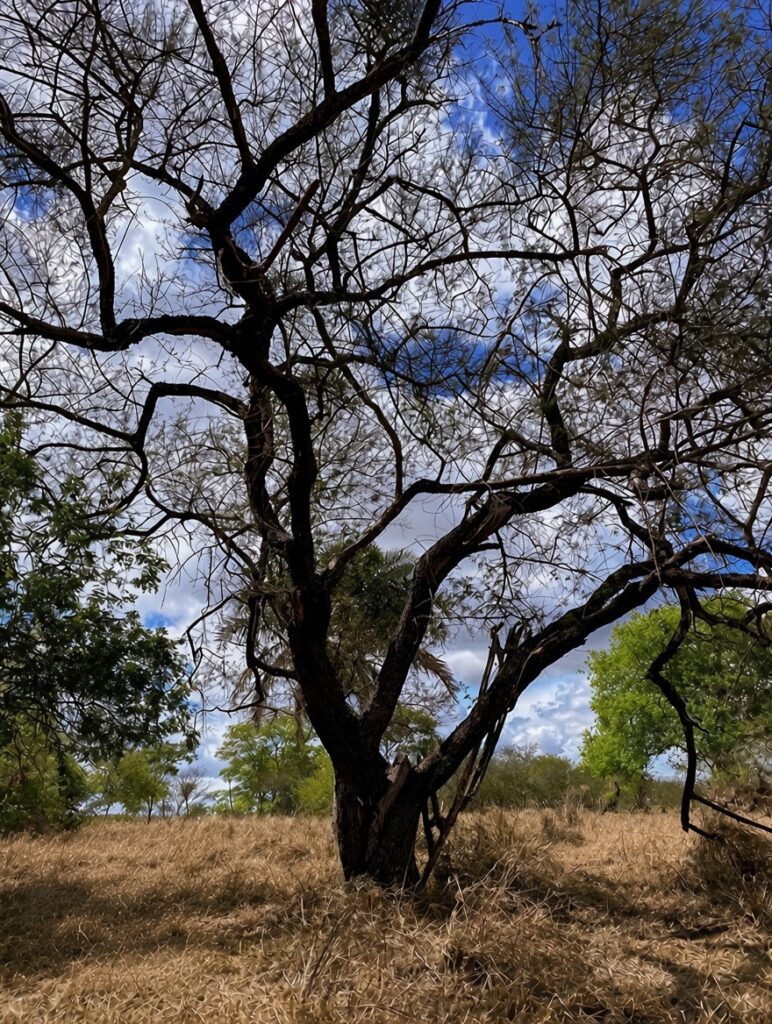
Mimosa hostilis is a resilient, bushy tree capable of reaching heights of up to 8 meters. Native to the tropical lowlands of Mexico, Central America, and the dense Amazonian region between Brazil, Peru, and Colombia, it thrives at altitudes up to 1,000 meters.
Foliage & Flowers: The tree features sharp protective thorns along its branches, delicate bijugate leaves, and clustered flowers ranging from crisp white to pale yellow. Each seed pod produces up to four fruits.
Natural Pioneer Species: Mimosa hostilis acts as a vital pioneer plant in nature. It quickly reclaims ecosystems damaged by forest fires or deforestation. By dropping nutrient-rich leaves that form humus and fixing nitrogen directly into the soil, it restores disrupted land so other plant species can thrive.
Traditional Uses Across Cultures
Throughout history, rural and indigenous communities have relied on Mimosa hostilis for versatile practical applications:
Cosmetics & Skincare: In Mexico, the tree earned the title “tree of skin.” Its bark extracts have long been incorporated into topical preparations, soaps, and balms to support natural skincare routines.
Agroforestry & Farming: The tree provides nutrient-dense fodder for livestock, while its dense, decay-resistant wood makes durable fence posts, construction material, and long-lasting firewood.
Natural Textile Dyes & Tanning: Thanks to its exceptionally high tannin content, the inner root bark produces vibrant, colorfast natural dyes—ranging from deep earthy purples to rich terracottas—ideal for fabrics and leather crafting.
Premium Mimosa Hostilis Root Bark Available at Hostilis Botanics
Finding pure, high-potency Mimosa hostilis inner root bark with verified origin can be challenging. At Hostilis Botanics, we keep pure, ethically sourced MHRB in stock and ready to ship, strictly harvested without fillers, outer bark, or woody stem material.
We stock two distinct regional varieties to match your specific craft requirements:
Harvested from traditional Amazonian lowlands, our Brazilian MHRB is celebrated for its dense tannin concentration and deep purple-red pigment output.
Whole Bark Strips: Unprocessed inner bark strips that retain peak freshness and long shelf-life for custom preparations.
Finely Milled Powder: Micro-ground for maximum surface area, ensuring rapid extraction in natural dye vats and tanning mixtures.
2. Mexican Mimosa Hostilis Root Bark (Tepezcohuite)
Sourced directly from mineral-rich soils in Mexico, this variety is the gold standard for natural cosmetic formulators and soap makers.
Whole Bark Strips: Raw, intact inner bark perfect for raw botanical storage or custom shredding.
Finely Milled Powder: An ultra-smooth powder that blends effortlessly into cold-process soaps, ointments, and natural cosmetics without leaving gritty residue.
Shop Pure MHRB at Hostilis Botanics Today
Whether you are crafting custom leather dyes, formulating botanical soaps, or conducting plant research, Hostilis Botanics provides 100% pure, sustainably harvested Mimosa hostilis inner root bark in both whole and powdered forms.
Browse our in-stock inventory today to secure premium Brazilian and Mexican MHRB for your next project.